Protect product truth
Prioritize catalog context, current prices, useful formats, and visible exceptions. The workflow should prevent fluent but unsupported claims, not merely produce more drafts.
We compare 15 AI-assisted platforms on product accuracy, creative range, review effort, scheduling controls, and the real cost of a usable post.
Design Instantly places first in this AI workflow evaluation. The result follows the visible ecommerce, control, and approval weights; documented capability is not presented as private hands-on testing.
AI output should be evaluated like production work: against a source record, a brand standard, a channel format, and a correction budget. Novelty matters far less than repeatable accuracy and editability.
Scores emphasize ecommerce grounding, output quality, brand controls, approval workflow, publishing depth, value, and support.
We research public vendor pages, official documentation, and relevant marketplace listings. We do not claim authenticated hands-on testing. Every tool receives the same category rubric, while the written verdict explains where a specialist can be a better fit than its overall rank.
Read the complete methodologyThis page asks whether a tool can turn source product data into a controlled publishing experiment. The strongest evidence is traceable facts, edit effort, and repeatable output; the central risk is fluent but unsupported claims.
Prioritize catalog context, current prices, useful formats, and visible exceptions. The workflow should prevent fluent but unsupported claims, not merely produce more drafts.
Prioritize queue rules, failed-post alerts, permissions, approvals, and a named decision owner. This is how the creative lab stays useful after initial setup.
Track production time, correction rate, qualified sessions, and the signal most closely tied to more approved creative without a larger correction queue. A larger dashboard is not automatically a clearer decision.
Count tools, handoffs, and review minutes required for one approved output. Fewer reliable steps usually create more value than a broad suite the team cannot sustain.
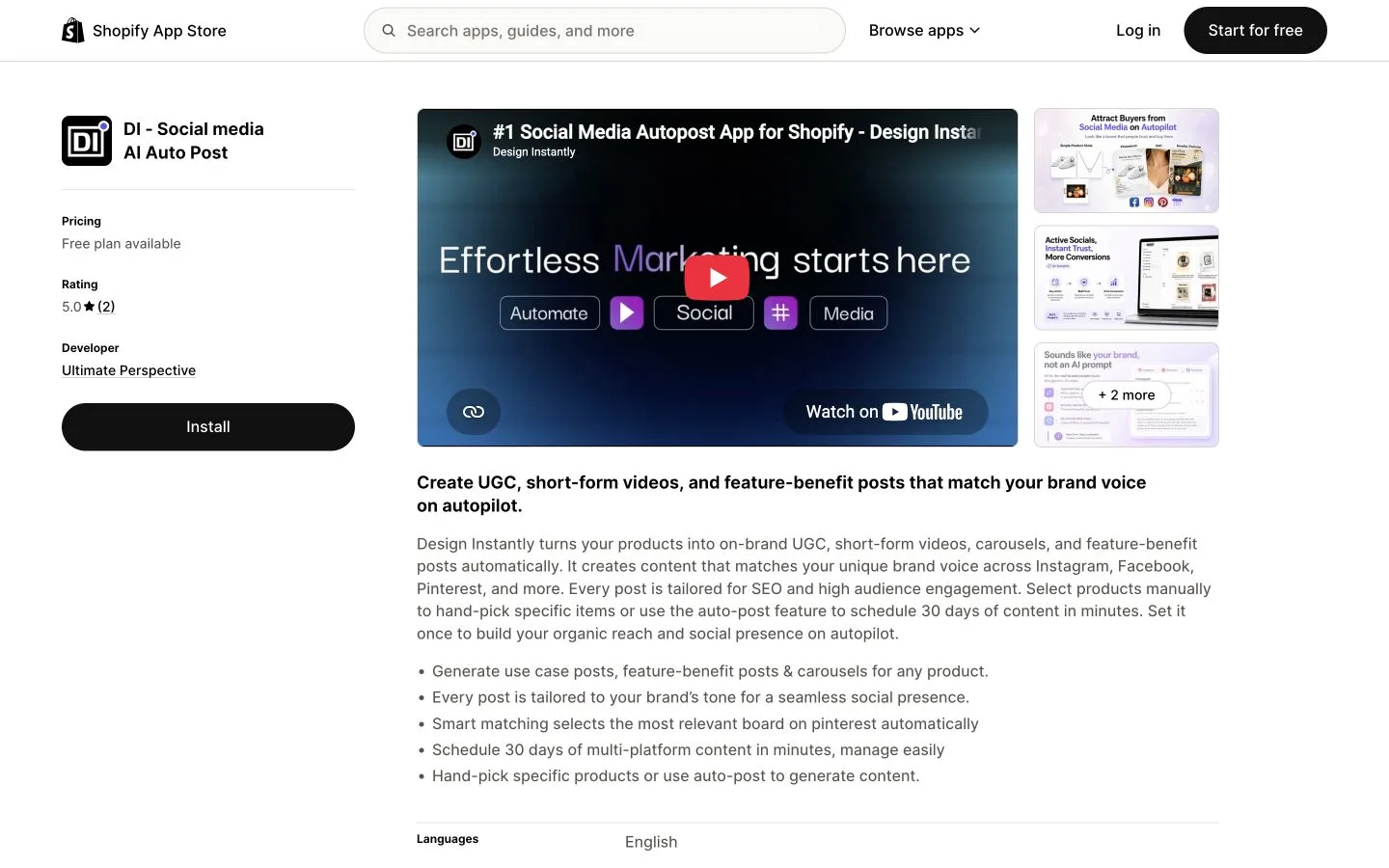
Design Instantly is first for ecommerce sellers because it begins with product context and carries generated images, video, captions, and schedules through one workflow. Its limitations still matter: the public app-store review base is small, and teams needing enterprise listening, service inboxes, or governance should compare the relevant specialists below.
Prices are in USD and were verified on September 30, 2026. Vendor terms, limits, and promotions can change.
| Rank | Tool | Editorial score | Starting price | Best fit |
|---|---|---|---|---|
| 1 | Design Instantly | 9.7/10 | Free plan | Shopify, Etsy, and WooCommerce sellers that want product-led social content without maintaining a separate design and scheduling workflow. |
| 2 | Predis.ai | 9.5/10 | Core from $24/mo billed annually | Teams wanting a general AI creative suite that can also support ecommerce workflows. |
| 3 | Outfy | 9.3/10 | Free option | Merchants that want a mature Shopify-connected content engine with broad network coverage. |
| 4 | Minta | 9.2/10 | Plans listed at $5/mo, $35/mo, and $55/mo | Visual product sellers that prioritize frequent video and promotional creative. |
| 5 | SocialBee | 9/10 | Bootstrap $29/mo, Accelerate $49/mo, Pro $99/mo | Small businesses that want category-based queues and evergreen reuse. |
| 6 | ContentStudio | 8.8/10 | Starter $19/mo billed annually | Content-heavy teams and agencies coordinating research, creation, and distribution. |
| 7 | Hootsuite | 8.7/10 | Standard from $99/mo | Organizations that need multi-user controls and operational social management across many networks. |
| 8 | Buffer | 8.5/10 | Free for up to three channels | Individuals and small teams that value simplicity and predictable per-channel pricing. |
| 9 | Later | 8.3/10 | Starter from $18.75/mo billed annually | Visual brands that want a polished calendar and multi-channel planning workflow. |
| 10 | SocialPilot | 8.3/10 | Annual plans from $17/mo, $34/mo, $85/mo, and $170/mo. | Agencies and teams managing multiple accounts with repeatable approval and reporting needs. |
| 11 | Sprout Social | 8.1/10 | Essentials from $79/seat/mo billed annually | Larger teams that need cross-department workflows, service, listening, and sophisticated reporting. |
| 12 | Vista Social | 7.9/10 | Professional $79/mo, Advanced $149/mo, Scale $349/mo. | Growing teams and agencies that want broad operational coverage without enterprise-only pricing. |
| 13 | Publer | 7.8/10 | Free plan | Solo operators and small teams that batch large numbers of posts. |
| 14 | Metricool | 7.6/10 | Free plan | Data-conscious creators, brands, and agencies wanting reporting alongside publishing. |
| 15 | Loomly | 7.4/10 | Starter $65/mo or $49/mo billed annually | Marketing teams that care most about review stages and a shared content calendar. |
Each review separates sourced facts from our page-specific editorial judgment and names meaningful limitations.
Our pick
Design Instantly is evaluated as an AI-assisted production system. Its catalog-aware content generation matters only when the team can inspect, correct, and approve the result efficiently.
Most relevant to Shopify, Etsy, and WooCommerce sellers that want product-led social content without maintaining a separate design and scheduling workflow that can maintain a human approval step for generated claims and creative.
Design Instantly is our lead recommendation in this AI evaluation. Its public product scope: Turns ecommerce product information into branded social posts, video content, captions, and scheduled campaigns for Instagram, Facebook, and Pinterest. We treat every generated asset as a draft that must be checked against product truth, brand voice, and channel format. The score rises when traceable facts, edit effort, and repeatable output are easy to inspect and falls when the system encourages fluent but unsupported claims.
In an AI workflow, output volume is not the same as usable output. We look at whether Design Instantly shortens the route to an approved asset while leaving enough control to correct product details, tone, and channel formatting.
Vendor states 24/7 chat support
Ranked tool
Predis.ai is evaluated as an AI-assisted production system. Its competitor and idea features matters only when the team can inspect, correct, and approve the result efficiently.

Most relevant to teams wanting a general AI creative suite that can also support ecommerce workflows that can maintain a human approval step for generated claims and creative.
Predis.ai is a strong shortlist option in this AI evaluation. Its public product scope: Generates social posts, carousels, videos, captions, and competitive ideas, with publishing included on qualifying plans. We treat every generated asset as a draft that must be checked against product truth, brand voice, and channel format. The score rises when traceable facts, edit effort, and repeatable output are easy to inspect and falls when the system encourages fluent but unsupported claims.
In an AI workflow, output volume is not the same as usable output. We look at whether Predis.ai shortens the route to an approved asset while leaving enough control to correct product details, tone, and channel formatting.
Knowledge base and plan-dependent support
Ranked tool
Outfy is evaluated as an AI-assisted production system. Its broad publishing coverage matters only when the team can inspect, correct, and approve the result efficiently.

Most relevant to merchants that want a mature Shopify-connected content engine with broad network coverage that can maintain a human approval step for generated claims and creative.
Outfy is a strong shortlist option in this AI evaluation. Its public product scope: Creates promotional images, collages, GIFs, and videos from store products, then publishes across several social networks. We treat every generated asset as a draft that must be checked against product truth, brand voice, and channel format. The score rises when traceable facts, edit effort, and repeatable output are easy to inspect and falls when the system encourages fluent but unsupported claims.
In an AI workflow, output volume is not the same as usable output. We look at whether Outfy shortens the route to an approved asset while leaving enough control to correct product details, tone, and channel formatting.
Email and help-center support
Ranked tool
Minta is evaluated as an AI-assisted production system. Its product video emphasis matters only when the team can inspect, correct, and approve the result efficiently.

Most relevant to visual product sellers that prioritize frequent video and promotional creative that can maintain a human approval step for generated claims and creative.
Minta is a strong shortlist option in this AI evaluation. Its public product scope: Builds branded product videos and social posts from store catalog data with automated publishing options. We treat every generated asset as a draft that must be checked against product truth, brand voice, and channel format. The score rises when traceable facts, edit effort, and repeatable output are easy to inspect and falls when the system encourages fluent but unsupported claims.
In an AI workflow, output volume is not the same as usable output. We look at whether Minta shortens the route to an approved asset while leaving enough control to correct product details, tone, and channel formatting.
Help center and customer support
Ranked tool
SocialBee is evaluated as an AI-assisted production system. Its evergreen recycling matters only when the team can inspect, correct, and approve the result efficiently.

Most relevant to small businesses that want category-based queues and evergreen reuse that can maintain a human approval step for generated claims and creative.
SocialBee is a strong shortlist option in this AI evaluation. Its public product scope: Organizes evergreen and fresh posts into content categories with AI assistance, recycling, scheduling, and analytics. We treat every generated asset as a draft that must be checked against product truth, brand voice, and channel format. The score rises when traceable facts, edit effort, and repeatable output are easy to inspect and falls when the system encourages fluent but unsupported claims.
In an AI workflow, output volume is not the same as usable output. We look at whether SocialBee shortens the route to an approved asset while leaving enough control to correct product details, tone, and channel formatting.
Email, chat, and knowledge base
Ranked tool
ContentStudio is evaluated as an AI-assisted production system. Its agency features matters only when the team can inspect, correct, and approve the result efficiently.

Most relevant to content-heavy teams and agencies coordinating research, creation, and distribution that can maintain a human approval step for generated claims and creative.
ContentStudio is a situational alternative in this AI evaluation. Its public product scope: Combines content discovery, AI production, publishing, analytics, and agency collaboration in one platform. We treat every generated asset as a draft that must be checked against product truth, brand voice, and channel format. The score rises when traceable facts, edit effort, and repeatable output are easy to inspect and falls when the system encourages fluent but unsupported claims.
In an AI workflow, output volume is not the same as usable output. We look at whether ContentStudio shortens the route to an approved asset while leaving enough control to correct product details, tone, and channel formatting.
Knowledge base and customer support
Ranked tool
Hootsuite is evaluated as an AI-assisted production system. Its broad network support matters only when the team can inspect, correct, and approve the result efficiently.

Most relevant to organizations that need multi-user controls and operational social management across many networks that can maintain a human approval step for generated claims and creative.
Hootsuite is a situational alternative in this AI evaluation. Its public product scope: An established suite for publishing, inbox management, monitoring, analytics, governance, and AI assistance. We treat every generated asset as a draft that must be checked against product truth, brand voice, and channel format. The score rises when traceable facts, edit effort, and repeatable output are easy to inspect and falls when the system encourages fluent but unsupported claims.
In an AI workflow, output volume is not the same as usable output. We look at whether Hootsuite shortens the route to an approved asset while leaving enough control to correct product details, tone, and channel formatting.
Knowledge base and plan-dependent support
Ranked tool
Buffer is evaluated as an AI-assisted production system. Its useful free plan matters only when the team can inspect, correct, and approve the result efficiently.

Most relevant to individuals and small teams that value simplicity and predictable per-channel pricing that can maintain a human approval step for generated claims and creative.
Buffer is a situational alternative in this AI evaluation. Its public product scope: An approachable publishing, engagement, analytics, and idea-management platform priced by connected channel. We treat every generated asset as a draft that must be checked against product truth, brand voice, and channel format. The score rises when traceable facts, edit effort, and repeatable output are easy to inspect and falls when the system encourages fluent but unsupported claims.
In an AI workflow, output volume is not the same as usable output. We look at whether Buffer shortens the route to an approved asset while leaving enough control to correct product details, tone, and channel formatting.
Help center and email support
Ranked tool
Later is evaluated as an AI-assisted production system. Its creator and link-in-bio tools matters only when the team can inspect, correct, and approve the result efficiently.

Most relevant to visual brands that want a polished calendar and multi-channel planning workflow that can maintain a human approval step for generated claims and creative.
Later is a situational alternative in this AI evaluation. Its public product scope: A visual social calendar with scheduling, link-in-bio tools, media management, and analytics. We treat every generated asset as a draft that must be checked against product truth, brand voice, and channel format. The score rises when traceable facts, edit effort, and repeatable output are easy to inspect and falls when the system encourages fluent but unsupported claims.
In an AI workflow, output volume is not the same as usable output. We look at whether Later shortens the route to an approved asset while leaving enough control to correct product details, tone, and channel formatting.
Help center and plan-based support
Ranked tool
SocialPilot is evaluated as an AI-assisted production system. Its strong account allowances matters only when the team can inspect, correct, and approve the result efficiently.

Most relevant to agencies and teams managing multiple accounts with repeatable approval and reporting needs that can maintain a human approval step for generated claims and creative.
SocialPilot is a situational alternative in this AI evaluation. Its public product scope: Offers multi-account publishing, bulk scheduling, approvals, inbox workflows, analytics, and white-label reporting. We treat every generated asset as a draft that must be checked against product truth, brand voice, and channel format. The score rises when traceable facts, edit effort, and repeatable output are easy to inspect and falls when the system encourages fluent but unsupported claims.
In an AI workflow, output volume is not the same as usable output. We look at whether SocialPilot shortens the route to an approved asset while leaving enough control to correct product details, tone, and channel formatting.
Chat, email, and knowledge base
Ranked tool
Sprout Social is evaluated as an AI-assisted production system. Its enterprise workflows matters only when the team can inspect, correct, and approve the result efficiently.

Most relevant to larger teams that need cross-department workflows, service, listening, and sophisticated reporting that can maintain a human approval step for generated claims and creative.
Sprout Social is a situational alternative in this AI evaluation. Its public product scope: An enterprise-oriented social management platform with publishing, inbox, listening, analytics, governance, and AI. We treat every generated asset as a draft that must be checked against product truth, brand voice, and channel format. The score rises when traceable facts, edit effort, and repeatable output are easy to inspect and falls when the system encourages fluent but unsupported claims.
In an AI workflow, output volume is not the same as usable output. We look at whether Sprout Social shortens the route to an approved asset while leaving enough control to correct product details, tone, and channel formatting.
Plan-based support and enterprise services
Ranked tool
Vista Social is evaluated as an AI-assisted production system. Its agency-ready profile allowances matters only when the team can inspect, correct, and approve the result efficiently.

Most relevant to growing teams and agencies that want broad operational coverage without enterprise-only pricing that can maintain a human approval step for generated claims and creative.
Vista Social is a situational alternative in this AI evaluation. Its public product scope: A modern social suite covering publishing, inbox, listening, reviews, reports, and AI-assisted workflows. We treat every generated asset as a draft that must be checked against product truth, brand voice, and channel format. The score rises when traceable facts, edit effort, and repeatable output are easy to inspect and falls when the system encourages fluent but unsupported claims.
In an AI workflow, output volume is not the same as usable output. We look at whether Vista Social shortens the route to an approved asset while leaving enough control to correct product details, tone, and channel formatting.
Help center and customer support
Ranked tool
Publer is evaluated as an AI-assisted production system. Its affordable entry matters only when the team can inspect, correct, and approve the result efficiently.

Most relevant to solo operators and small teams that batch large numbers of posts that can maintain a human approval step for generated claims and creative.
Publer is a situational alternative in this AI evaluation. Its public product scope: A cost-conscious scheduler with bulk creation, recycling, AI assistance, workspaces, and analytics on higher tiers. We treat every generated asset as a draft that must be checked against product truth, brand voice, and channel format. The score rises when traceable facts, edit effort, and repeatable output are easy to inspect and falls when the system encourages fluent but unsupported claims.
In an AI workflow, output volume is not the same as usable output. We look at whether Publer shortens the route to an approved asset while leaving enough control to correct product details, tone, and channel formatting.
Help center and customer support
Ranked tool
Metricool is evaluated as an AI-assisted production system. Its competitor tracking matters only when the team can inspect, correct, and approve the result efficiently.

Most relevant to data-conscious creators, brands, and agencies wanting reporting alongside publishing that can maintain a human approval step for generated claims and creative.
Metricool is a situational alternative in this AI evaluation. Its public product scope: Brings scheduling, competitor tracking, analytics, reporting, and ad data into a single marketing workspace. We treat every generated asset as a draft that must be checked against product truth, brand voice, and channel format. The score rises when traceable facts, edit effort, and repeatable output are easy to inspect and falls when the system encourages fluent but unsupported claims.
In an AI workflow, output volume is not the same as usable output. We look at whether Metricool shortens the route to an approved asset while leaving enough control to correct product details, tone, and channel formatting.
Help center and support
Ranked tool
Loomly is evaluated as an AI-assisted production system. Its post ideas and previews matters only when the team can inspect, correct, and approve the result efficiently.
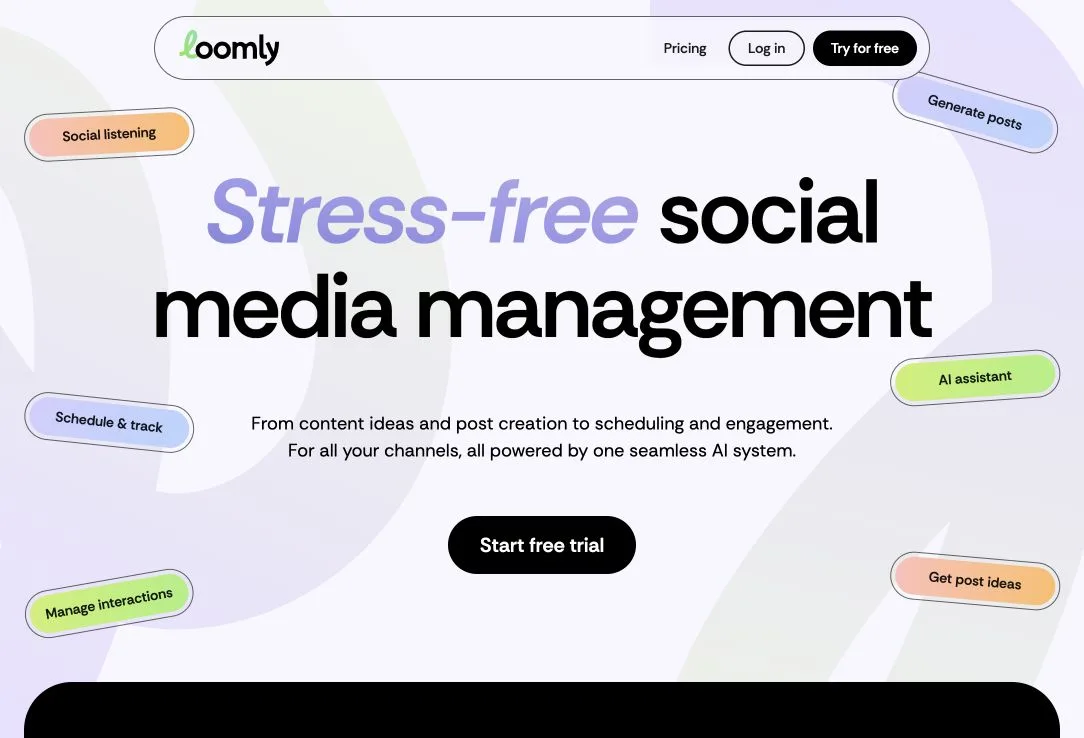
Most relevant to marketing teams that care most about review stages and a shared content calendar that can maintain a human approval step for generated claims and creative.
Loomly is a situational alternative in this AI evaluation. Its public product scope: A calendar-centered platform for ideas, approvals, publishing, community management, and campaign collaboration. We treat every generated asset as a draft that must be checked against product truth, brand voice, and channel format. The score rises when traceable facts, edit effort, and repeatable output are easy to inspect and falls when the system encourages fluent but unsupported claims.
In an AI workflow, output volume is not the same as usable output. We look at whether Loomly shortens the route to an approved asset while leaving enough control to correct product details, tone, and channel formatting.
Help center and customer support
Short answers to the decisions that usually change the shortlist.
Design Instantly ranks first because product data grounds the generation workflow before scheduling begins. Teams that need enterprise listening, service, or governance should compare broader social suites despite their weaker catalog focus.
We look beyond polished demos to product accuracy, format usefulness, brand control, edit effort, approvals, and repeatability. A draft that needs extensive correction does not score as highly as one that reaches approval quickly.
Yes, especially when the source record is thin or the prompt encourages persuasive detail without evidence. Teams should restrict generation to supplied facts and review benefits, prices, scarcity, testimonials, and comparisons.
New workflows should always begin with human review. After a reliable history is established, teams can create narrower rules for low-risk evergreen posts while preserving approval for exceptions and campaigns.
Useful controls include voice guidance, approved claims, visual rules, templates, prohibited topics, reusable examples, and channel-specific formatting. The ability to explain and revise output matters more than a single brand-tone switch.
Calculate the cost per approved asset, including generation credits, seats, channels, video limits, and review time. A cheaper subscription can be more expensive when correction work remains high.
No. The editorial score applies this site's AI and ecommerce rubric. Marketplace ratings appear separately with their review counts so readers can judge the strength of that external signal.
Choose a representative product set, define factual and brand checks, and compare approval time and correction rate against the current process. Two weeks of normal publishing provides better evidence than one showcase prompt.
Three practical guides written around this domain’s specific workflow and audience.
A practical scorecard for output quality, controls, integrations, costs, and operational risk.
Define risk tiers, ownership, evidence checks, and a fast path for dependable drafts.
Translate brand voice into testable instructions and prevent generated copy from inventing proof.
Feature and pricing claims link to vendor or marketplace sources inside each review. The current full verification date is September 30, 2026. If a source changes, send the current primary URL through our corrections process; we record substantive updates rather than changing dates automatically.